
If your manufactured home roof is leaking every winter, running hot in summer, or showing signs of age, looking at mobile home roof over options makes sense. A roof over can improve weather protection, add insulation value, and extend the life of the home without the cost of a full structural rebuild. But the right choice depends on the roof shape, existing condition, budget, and how long you plan to keep the home.
A lot of homeowners hear the term roof over and assume it is one product. It is not. A roof over is a method of installing a new roofing system over the existing roof structure, usually with added framing, insulation, or both. Done correctly, it can solve recurring problems. Done poorly, it can hide damage, trap moisture, and create more expense later.
What a roof over is meant to do
A mobile home roof over is usually chosen for practical reasons. The first is leak control. Older manufactured homes often have low-slope or flat roof designs that are more vulnerable to ponding water, failed seams, and aging coatings. The second is energy performance. Adding insulation during a roof over can help stabilize indoor temperatures and reduce strain on heating and cooling systems.
There is also a durability factor. In many cases, the original roof has simply reached the point where patching no longer makes financial sense. A roof over gives the home a new protective layer and, in some cases, a better drainage profile than the original design.
That said, a roof over is not the right answer for every home. If the existing roof deck or framing has major rot, sagging, or structural damage, covering it may only delay a larger repair. The condition underneath matters just as much as the new material on top.
Common mobile home roof over options
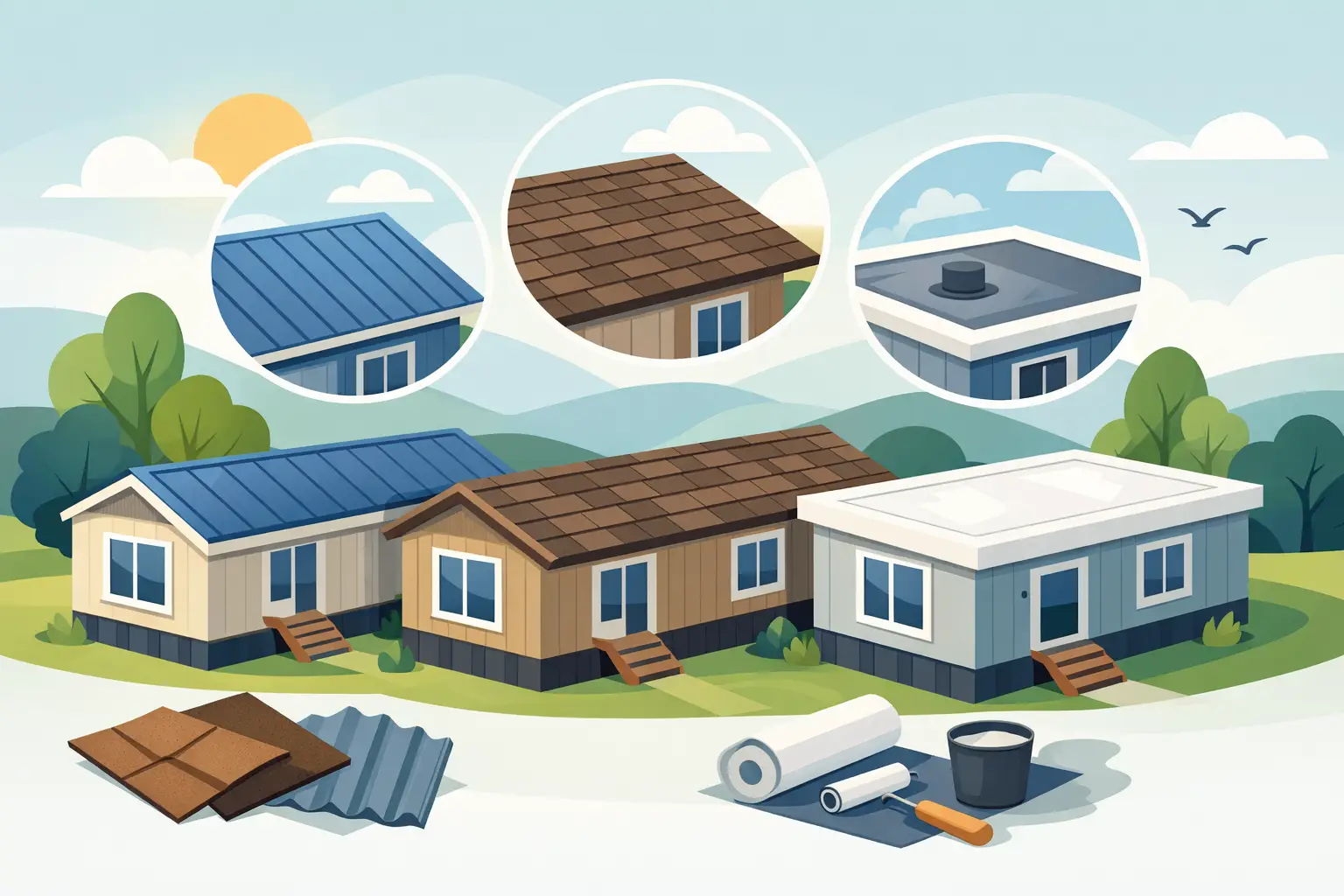
There are several mobile home roof over options on the market, but most fall into a few practical categories. Each has strengths and trade-offs.
Metal roof over systems
Metal is one of the most common choices for manufactured homes, especially where long-term durability matters. A metal roof over is often installed over a framed system that creates a slight pitch above the original roof. That improved slope helps water run off better than many older flat or low-slope mobile home roofs.
The main advantages are lifespan, weather resistance, and relatively low maintenance. Metal also performs well in areas that see heavy rain. For many owners, that is the biggest selling point.
The trade-off is cost. Metal roof overs usually cost more upfront than coatings or some membrane systems. Installation also needs to be done carefully. Poor fastening, weak trim work, or bad flashing details around vents and edges can lead to leaks even when the panel material itself is strong.
Membrane roof over systems
Single-ply membranes are another option, particularly for manufactured homes with flat or low-slope designs. These systems are designed to create a continuous waterproof surface and are often a good fit when the home does not need a dramatic change in roof shape.
A membrane roof over can make sense when the goal is reliable waterproofing without building a full pitched structure. It may also be a good fit for homes where adding too much weight is a concern. The finished look is usually simpler and more functional than decorative.
The downside is that membrane systems depend heavily on installation quality. Seams, penetrations, perimeter terminations, and drainage details all matter. A membrane roof can perform very well, but shortcuts during installation usually show up later as leaks.
Roof coating systems
Some owners consider elastomeric or reflective coatings when their current roof is aging but not yet structurally failing. A coating is not always a full roof over in the framed sense, but it is often discussed alongside other restoration options because it adds a protective layer over the existing roof surface.
Coatings are usually the lower-cost option upfront. They can help with minor weathering, reduce heat absorption, and extend service life when the roof is still in decent condition. For someone trying to buy time before a larger project, a coating may be worth considering.
But there are limits. A coating will not correct rotten decking, poor drainage, or serious leak paths caused by movement or failed seams. If the roof has underlying damage, a coating can become a temporary patch rather than a real fix.
Choosing the right roof over for your home
The best system depends on what problem you are trying to solve.
If the roof leaks because water sits on a low area, improving slope may be the main goal. In that case, a framed metal roof over may be the stronger long-term choice. If the roof is broadly sound but the waterproof surface is worn out, a membrane system may do the job without changing the structure much. If the roof is still serviceable and you are trying to extend its life for a shorter term, a coating may be enough.
Climate also matters. In Oregon, rain performance and drainage details should be taken seriously. A roofing system that looks affordable on paper may not stay affordable if it struggles with persistent moisture. The more water your roof sees, the more important good slope, flashing, and workmanship become.
Budget matters too, but the cheapest price is not always the lowest cost. A lower-cost system that lasts only a few years or leads to repeated repairs can end up costing more than a properly installed roof over that holds up for the long run.
What contractors should inspect before recommending a roof over
A trustworthy contractor should not recommend a roof over from the driveway. The existing roof needs to be evaluated first.
That includes checking for soft spots, sagging areas, signs of trapped moisture, previous repair layers, failing penetrations, and edge conditions. Insulation and ventilation should also be considered where relevant. In some homes, the roof surface looks acceptable until moisture damage is found underneath.
Weight load is another factor. Any new system added over an existing roof has to make sense for the home’s structure. Manufactured homes are not all built the same, and a one-size-fits-all answer is rarely the best answer.
Permitting and code requirements may also come into play depending on the scope of work and local rules. A contractor who works regularly on manufactured home roofing should be able to explain what is required and what is not.
When a roof over is not the best option
There are times when replacement or structural repair is the better path.
If the existing roof has widespread rot, if framing has failed, or if moisture damage has gone on for too long, covering the problem may create a more expensive tear-off later. The same is true when a home has had multiple previous roofing layers and drainage is already compromised.
A roof over should improve performance, not just hide age. If the home needs major repair below the surface, that should be addressed first.
Why workmanship matters more than the brochure
Roofing materials always sound good in sales language. What makes the difference in the field is installation. The edge metal, transitions, penetrations, fasteners, and drainage details are where problems usually start. On manufactured homes, small mistakes can lead to water getting where it should not be.
That is why experience matters. A contractor who understands flat and low-slope roofing, and who has worked on manufactured homes before, is more likely to spot issues early and recommend the right system instead of the easiest sale. Rich Rayburn Roofing works with manufactured home flat roofing and understands how important those details are for long-term performance.
If you are comparing mobile home roof over options, start with the condition of the roof you have now, not just the material you think you want. A solid recommendation should match the structure, the drainage needs, and your budget for the years ahead. The best roof over is the one that solves the actual problem and holds up when the weather turns.