
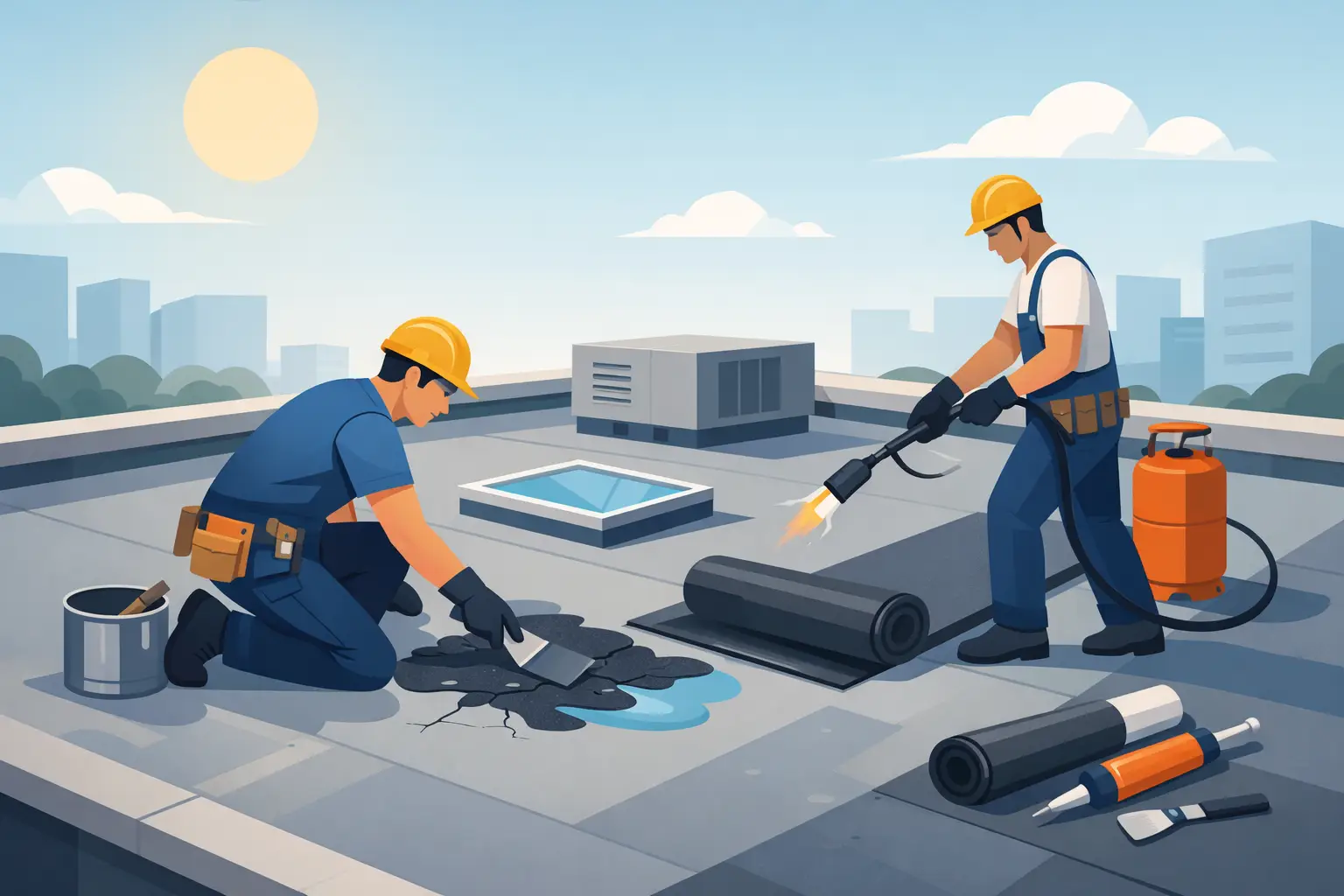
A flat roof rarely fails all at once. More often, it starts with a small leak over a back bedroom, soft spots near a drain, or bubbling that shows up after a stretch of Oregon rain. If you’re asking can a flat roof be repaired, the short answer is yes – many flat roofs can be repaired successfully. The real question is whether a repair will solve the problem for the long term or just buy a little time.
That depends on the roof’s age, the type of roofing material, how widespread the damage is, and how long water has been getting in. A good contractor should look beyond the visible leak and determine whether the roof still has sound structure and enough life left to justify repair.
When a flat roof can be repaired
In many cases, a flat roof repair is the right call. Small punctures, split seams, flashing failures, and isolated ponding issues can often be fixed without replacing the whole system. If the insulation below the roof membrane is still dry and the decking is solid, targeted repair work can restore performance and stop further damage.
This is especially true on roofs that are still in the middle of their service life. A newer or properly maintained flat roof may only need patching, seam repair, re-flashing, or coating in a problem area. For commercial buildings, manufactured homes, and residential flat roofs alike, localized issues do not always mean the entire roof is worn out.
The key is catching the problem early. A small membrane split is one repair. A small split that has been leaking for two winters can turn into saturated insulation, mold, stained ceilings, and structural rot. The leak you see inside is often smaller than the damage hidden underneath the surface.
Signs a repair may be enough
A repair usually makes sense when the problem is limited and the rest of the roof is still doing its job. If the leak can be traced to one area, and inspection shows the surrounding membrane is in good condition, repair is often the practical option.
You may also be a good candidate for repair if the roof is under 15 to 20 years old, depending on the system installed. Some flat roofing materials last longer than others, and maintenance history matters. A roof that has had regular service and prompt repairs will usually give better repair results than one that has been ignored.
Another good sign is damage caused by a specific event. Wind can loosen flashing. A branch can puncture the membrane. Foot traffic from another trade can create a weak spot. When the cause is isolated, the fix can often be isolated too.
When the answer shifts from repair to replacement
There are times when asking can a flat roof be repaired leads to an honest answer you may not want to hear. Yes, it can be repaired physically, but that does not mean it should be.
If a roof has widespread blistering, multiple leak points, failing seams across large sections, or long-term trapped moisture, repair may turn into repeated spending with limited results. The same goes for roofs near the end of their expected life. Putting money into a worn-out flat roof can make sense as a short-term measure, especially if you need time to budget, but it may not be the most cost-effective decision.
A replacement also becomes more likely when the roof deck has softened or when water has spread under the membrane into a broad area of insulation. On flat roofs, moisture does not always stay close to the source. It can travel, settle, and damage materials far from where the leak first appears inside.
For commercial buildings, replacement may also be the better move if patching would interrupt operations repeatedly over time. One larger project is sometimes easier to plan around than a string of small emergency repairs.
What flat roof problems are commonly repaired
Several common flat roof issues can be repaired if addressed in time. Separated seams are one of the biggest ones, especially on membrane systems. Flashing around vents, edges, skylights, and wall transitions is another frequent trouble spot.
Punctures and surface cracks can also be repaired, depending on size and location. On some roofs, standing water is not caused by a failed membrane but by poor drainage in one section. In that case, repair may involve both sealing damaged material and correcting the drainage issue so the same problem does not keep coming back.
Coatings can play a role in certain situations, but they are not a cure-all. A coating applied over wet insulation or a failing substrate will not fix the underlying problem. Used correctly, coatings can extend the life of a sound roof. Used as a shortcut, they often delay the real work that needs to be done.
Can a flat roof be repaired from the inside?
Property owners sometimes ask whether a flat roof can be repaired from inside the building, especially if weather is bad or access is difficult. In most cases, the real repair has to happen on the outside where the membrane, seams, flashing, and drainage components are located.
Interior measures can help limit damage for a short time. A contractor may stop active leaking inside, protect finishes, or identify the path of water entry. But if the exterior system is compromised, the permanent fix needs to address that source directly.
That is one reason emergency response matters. Temporary protection can keep damage from getting worse, but it should lead into a proper roof repair plan as soon as conditions allow.
Why flat roof repairs fail
Not every repair lasts, and there is usually a reason. Sometimes the wrong material is used for the roofing system. Sometimes the visible leak is patched, but the actual failure point is somewhere else. And sometimes the repair is technically correct, but it is being applied to a roof that is too deteriorated for patchwork to hold up.
Flat roofs demand careful diagnosis. Water can move sideways, enter at flashing, and show up indoors several feet away. A rushed repair may stop dripping for a week and still leave the roof vulnerable. Skilled workmanship matters here. So does experience with the specific flat roof system on the building.
This is where a smaller, specialized crew often has an advantage. With flat roofing, quality control matters more than speed for its own sake. A repair that is done right the first time is almost always cheaper than paying for the same area twice.
How a contractor decides whether repair is worth it
A proper inspection should look at more than the leak itself. The contractor should assess membrane condition, seams, flashing, drainage, soft decking, insulation moisture, and signs of previous patchwork. If multiple repairs have already been made across the roof, that history matters.
The decision usually comes down to three things: how bad the current damage is, how much useful life remains in the roof, and whether repair gives you reliable value. Sometimes a repair is the clear choice. Sometimes replacement is clearly smarter. And sometimes the best answer is a repair now with a plan to replace the roof in the near future.
That middle-ground option is common for property owners managing budgets. A solid contractor should be able to tell you if a repair is a real solution or just a temporary measure so you can make the decision with your eyes open.
What Oregon weather does to flat roofs
In Roseburg, Coos Bay, and across Coos and Douglas County, flat roofs deal with steady moisture, wind-driven rain, moss growth, and seasonal debris. Those conditions can shorten the life of a neglected roof fast. Drains clog. Water sits longer than it should. Moss holds moisture on the surface and around transitions.
That does not mean flat roofs are a bad choice here. It means maintenance and timely repairs matter more. A flat roof that gets inspected, cleaned, and repaired as needed can perform well for years. A flat roof that is ignored usually becomes expensive at the worst possible time.
For local property owners, the best approach is practical. If a leak shows up, do not wait for it to become a bigger problem. If the roof is aging, have it inspected before the rainy season rather than after interior damage appears.
The honest answer to can a flat roof be repaired
Yes, many flat roofs can be repaired, and in the right situation a repair is the smartest and most cost-effective option. But a repair only makes sense if the roof still has enough life and structural integrity to support that work. If the damage is widespread or the system is worn out, replacement may save money and frustration over time.
A straightforward inspection is what gives you the real answer. Rich Rayburn Roofing has worked on flat roofing systems for homeowners, manufactured home owners, and commercial properties throughout this region for decades, and the goal is always the same: recommend the work that fits the condition of the roof, not just the quickest sale.
If your flat roof is leaking, sagging, blistering, or showing signs of wear, the most helpful next step is simple – have it looked at before a manageable repair turns into a much larger job.